
If you’re familiar with sea buckthorn (Hippophae rhamnoides, also called seaberry) shrubs, it’s probably because of the beauty and edibility of the berries, those brilliant orange pops of fruity sunshine. But, here on the prairies (and elsewhere in the country) June is the month to harvest and dry sea buckthorn leaves for tisane – well, the leaves from the male plants, that is. (Sea buckthorn are dioecious and flowers are borne separately on male and female plants. You need both to produce fruit. One male plant can pollinate up to seven females, and you need the wind to make the required pollen transfer). You can harvest the leaves from female plants, as well, but you must wait until autumn, after the berries are produced.
Sea buckthorn tisane is purported to be chockful of amino acids and antioxidants, and there are claims that it acts as an immune booster and an anti-inflammatory. Scientific studies are continuously ongoing. For now, I’m just going to enjoy the plant’s leaves and berries because they taste good and I have access to them. Many gardeners aren’t aware of the uses of this particular plant and might not take advantage of its edibility…as long as you’re absolutely certain of your proper identification of the plant, you may want to try it and see if you enjoy eating it. (If you don’t know for sure what you’re dealing with, please don’t sample it. That goes for every plant you encounter).
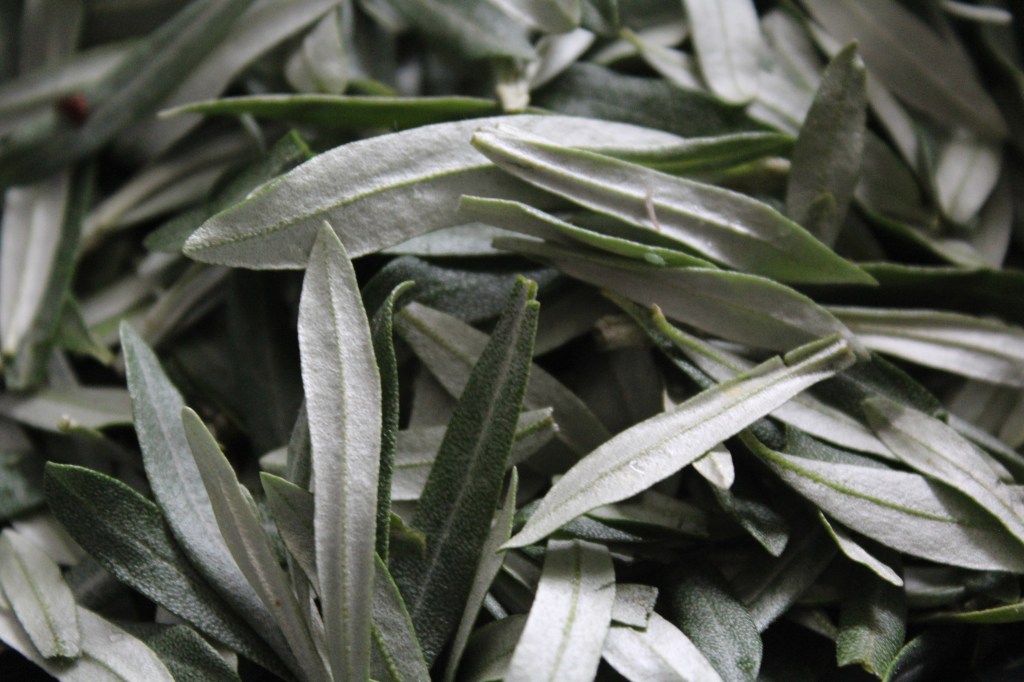
When you’re ready to pick leaves, you first need to figure out which plants are male. That can be a huge challenge unless you’ve purchased labelled male and female plants for your garden and you know which one is planted where. The females are the ones that produce the berries, but they don’t do that until nearly September. But – no fear! This website has some extremely helpful photos and information to differentiate the males from the females – check it out before you head out to do some harvesting.
Bear in mind while you’re picking to go easy on the plant and not remove too much – you never want to stress the plant by overharvesting. The plant needs a good canopy of those beautiful silvery-green leaves to conduct photosynthesis! For your first harvest, only take a handful in case you aren’t keen on the drink.
Wash the leaves well and pat them dry with a towel. Lay them out in a single layer on a wire rack and allow them to air dry for several days in a cool, dry location. You should turn them every couple of days or so. When it comes time to pack them up, store them in a clean, airtight tea tin and label the contents.
Once the leaves are dry and ready, brew them up to your preferred strength. You can enjoy them as is or make a custom blend by adding green tea leaves or dried fruit (why not try sea buckthorn berries?). A splash of locally-produced honey drizzled in hits the spot!
Do you grow sea buckthorn? Have you ever eaten the berries or used them or sea buckthorn oil in cosmetics? (I regularly buy a sea buckthorn lip balm from an excellent company in Manitoba).


 Flowery Prose.