
Panicle
A few weeks ago, I received a question from a gardener in the city who wanted to know about the best hydrangeas to grow in Calgary. Due to our climate, we’re not able to overwinter the really showstopping bigleaf types (H. macrophylla) that gardeners in warmer regions can, but we still have some extremely nice selections to choose from. I suggested that, due to sufficient cold hardiness, smooth hydrangeas (H. arborescens) and panicle hydrangeas (H. paniculata) tend to fare best in our part of the world – and then he wanted to know: what on earth did I mean by the word ”panicle”?
Good question! The term panicle is often associated with grasses. Most grass panicles are easy to identify. Here is an example: Take a look at the fuzzy top of foxtail barley (Hordeum jubatum, a beautiful but persistent, troublesome weed here in Alberta). That lovely plume is a panicle, a type of compound flower head that features long, sliver-like awns, which can cause pain for livestock that accidentally graze on the plant.
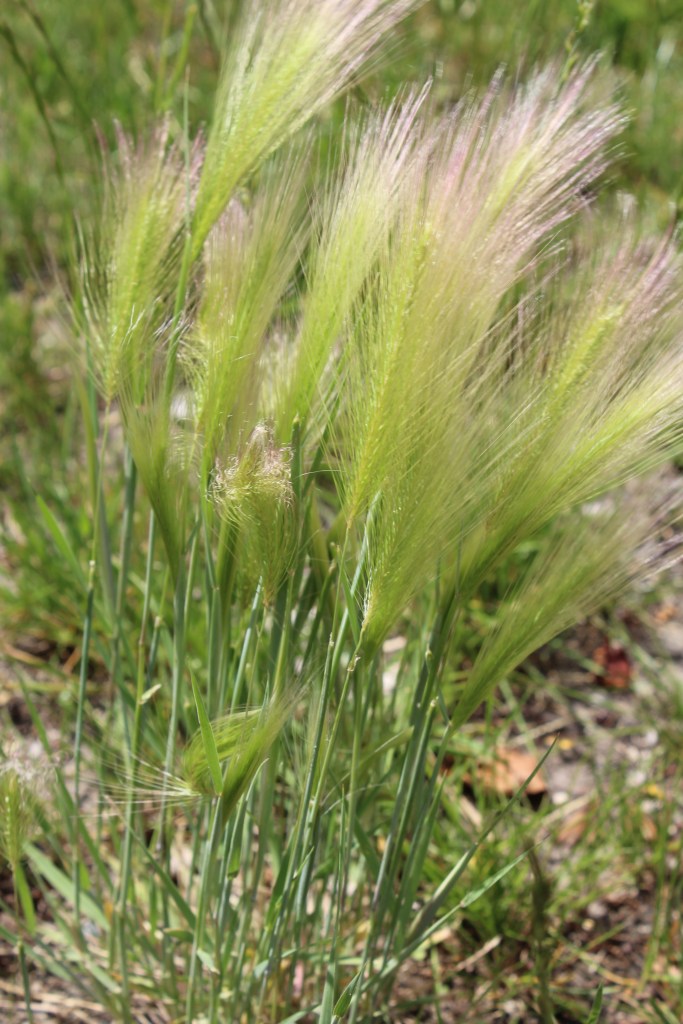
With hydrangeas, what we think of as one huge flower is actually a panicle. Like the fuzzy flower head of foxtail barley, a hydrangea’s panicle is a compound inflorescence. It is made up of tiny individual florets, which are attached via pedicels (stem-like structures) to “branches” called racemes. Panicle hydrangeas are named for this type of floral arrangement.
Do you grow hydrangeas (any types)? If so, which ones are your favourites? (If you have any, please feel free to link up to photos of your hydrangeas on your blog or website – I’d love to see them!).


 Flowery Prose.