(I am linking to Roses and Other Gardening Joys‘ April Book Reviews! Head on over there to peruse all of the wonderful titles and reviews by participating bloggers!).
Those of you who have been following my blog for awhile now may remember that I constructed a vermicomposting bin in February of last year (you can read about it here). Unfortunately, several months into my project, I inadvertently caused an imbalance in my new bin and the entire set-up experienced Catastrophic Worm Failure in the early fall. I didn’t give up, however, and my vermicomposting efforts are back on track, with far greater success than before. My worms gobble down a huge portion of the kitchen scraps my hubby and I generate every week, and everything is now functioning as it should.
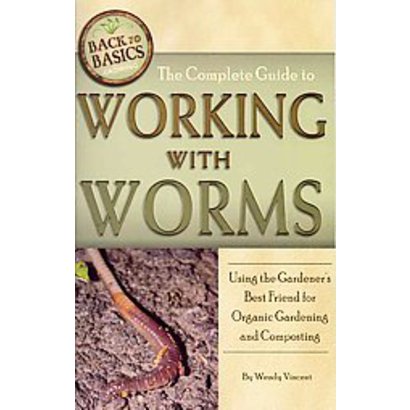
Whether you’re a newbie or an old hand at keeping worms for composting, Wendy Vincent’s book The Complete Guide to Working With Worms: Using the Gardener’s Best Friend for Organic Gardening and Composting (2012, Atlantic Publishing Group, Inc., Florida), is a good resource guide. Vincent wasn’t kidding with her lengthy title: this is indeed a “complete” guide. Her book covers everything you’ll need to know about the wriggly workers – from setting up a worm habitat to keeping the little critters happy in their new digs. Feeding, care, and harvesting necessarily warrant their own chapters, and there is an excellent section devoted to troubleshooting tips. Vincent carefully compares traditional composting methods with vermicomposting and while she advocates using both types simultaneously if possible, she encourages the use of vermicomposting in small residential and commercial spaces, locations that may not support traditional composting. Through “Family Activities,” Vincent shows how fun it is to share the vermicomposting experience with children, and there are entertaining worm facts, science, and history sprinkled throughout the book. Finally, Vincent also covers how to set up a small business selling excess populations of worms.
Although comprehensive, The Complete Guide to Working With Worms is extremely accessible – there’s no bogging down in technical detail or arcane knowledge. It is easy to read, understand, and follow. While the book is short on photos, there are some small black and white images included, and tables and diagrams where required to illustrate concepts such as building a worm bin. (It’s probably not necessary to have full page, glossy colour worm action shots, anyway!). 😉 This is a title I would definitely keep in my library and recommend to anyone considering vermicomposting to help nourish the garden. It’s also a fabulous source of information for teachers wanting to start up a worm bin in the classroom.
Do you keep working worms, or would you consider doing so? Do you have a traditional compost bin instead?
Related articles
- How to Vermicompost: Employing Worms (blogher.com)
- Composting with worms – Vermicomposting (wteconsult.wordpress.com)
- Wiggly Worms (jeniceschultheis.wordpress.com)
- Red Wigglers & Worm Poop: The Benefits of Vermicomposting (livinggreenandsavingenergy.com)
- Benefits of Vermicomposting (rainbowworms.info)
- Vermicomposting; or, the wonderful world of worms (theconscientiousomnivore.wordpress.com)
- Home Composting: Get the Right Bin (wholefoodsmarket.com)
If you’ve already got a wormery set up, check out this great article about feeding your worms – it even includes some delicious desserts to treat your workers with!


 Flowery Prose.