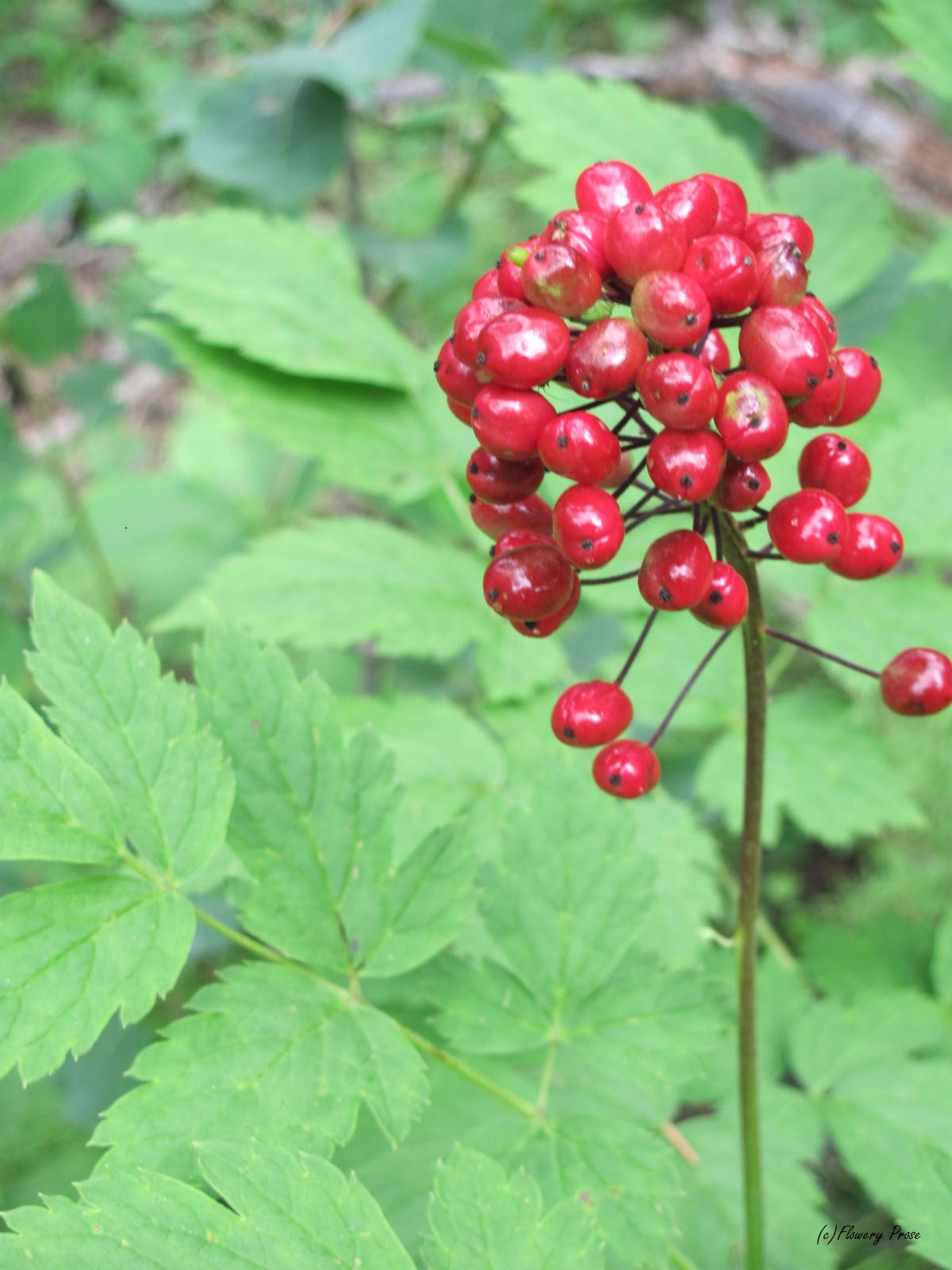
This is one of those “Look but don’t eat” plants: Red baneberry (Actaea rubra) is a very beautiful woodland herbaceous perennial, but all parts of it are poisonous. As an interesting – and decidedly creepy – sidenote, one of its common names is “doll’s eye.”
This specimen was eyeballed (couldn’t resist!) at a campground in southern Alberta, but red baneberry has a fairly wide distribution in the province. It’s not a plant you’d find in a typical garden setting, however…although if you had a shady, moist spot, you could try it. Baneberry is one of the featured plants at the Reader Rock Garden here in Calgary, where it thrives in the dappled shade beneath large trees.
I don’t currently have any extremely toxic plants in my flower garden; I grew foxglove for a few years but haven’t tried any again since they died. My flowerbeds are on public property and it’s for the best that I don’t grow anything dangerous. Lately, I keep running into people who seem to think all plants are for the sampling – and it’s not just this lady and her young daughter that I wrote about last year. I recently talked to someone who seemed to think you could make tea out of any plant that smelled good, and another gardener who chewed on a mystery plant without having the foggiest notion what it was (she still doesn’t know, and neither do I, but apparently it tasted a little like sorrel. She didn’t report on whether or not she got a stomach ache). I’m delighted that everyone is so eager to chow down on fresh vegetative matter, but you’d think self-preservation would be more of a concern! 🙂
Do you grow any poisonous plants in your garden? Do you take any special precautions to keep them out of the reach of children and pets?
[Post updated 17 June 2022]


 Flowery Prose.