
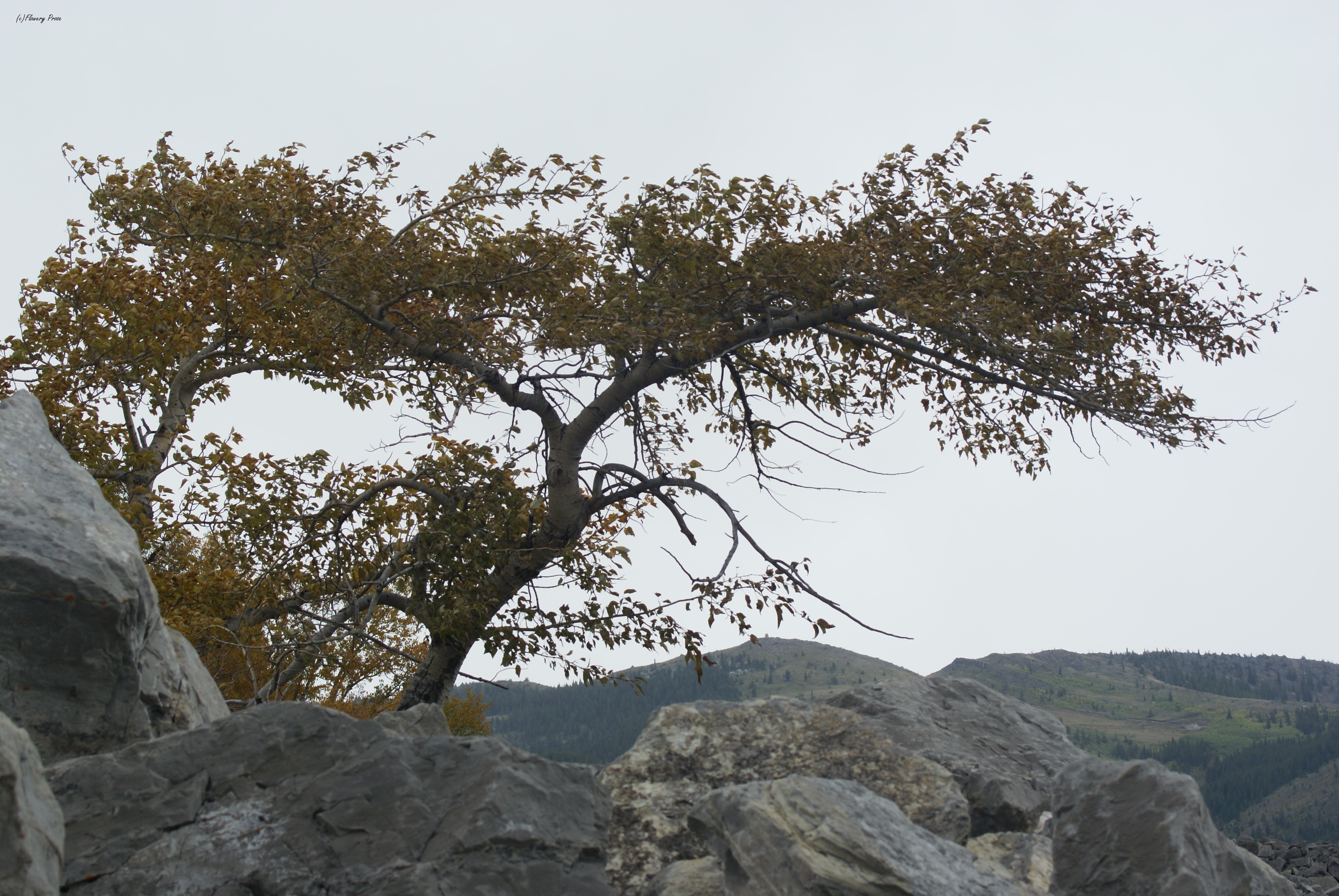
On our recent trip to the Crowsnest Pass, my hubby and I spent a couple of hours walking among the massive ruins of the peak of Turtle Mountain, which slid over the east side of the town of Frank at 4:10 in the morning on April 29, 1903. The slide lasted just over a minute and a half, and at least seventy people were killed, buried under 82 million tonnes (90 million tons) of limestone.
It is an overwhelmingly surreal experience to spend time in the slide zone and try to comprehend the enormity and horror of it: an entire mountainside collapsed and spread over three square kilometres. It is now widely accepted that the mountain was geologically unstable and unseasonably warm weather as well as mining activity at the base of the mountain may have contributed to the slide; while no mining has taken place there since 1917, Turtle Mountain remains on “slide alert” and is monitored by the Alberta Geological Survey via radar and laser mapping systems. (You can watch a short video about some of the technology being used here).

The fall colours weren’t as rich as they must be now, three weeks later, but the trees were still incredibly beautiful.

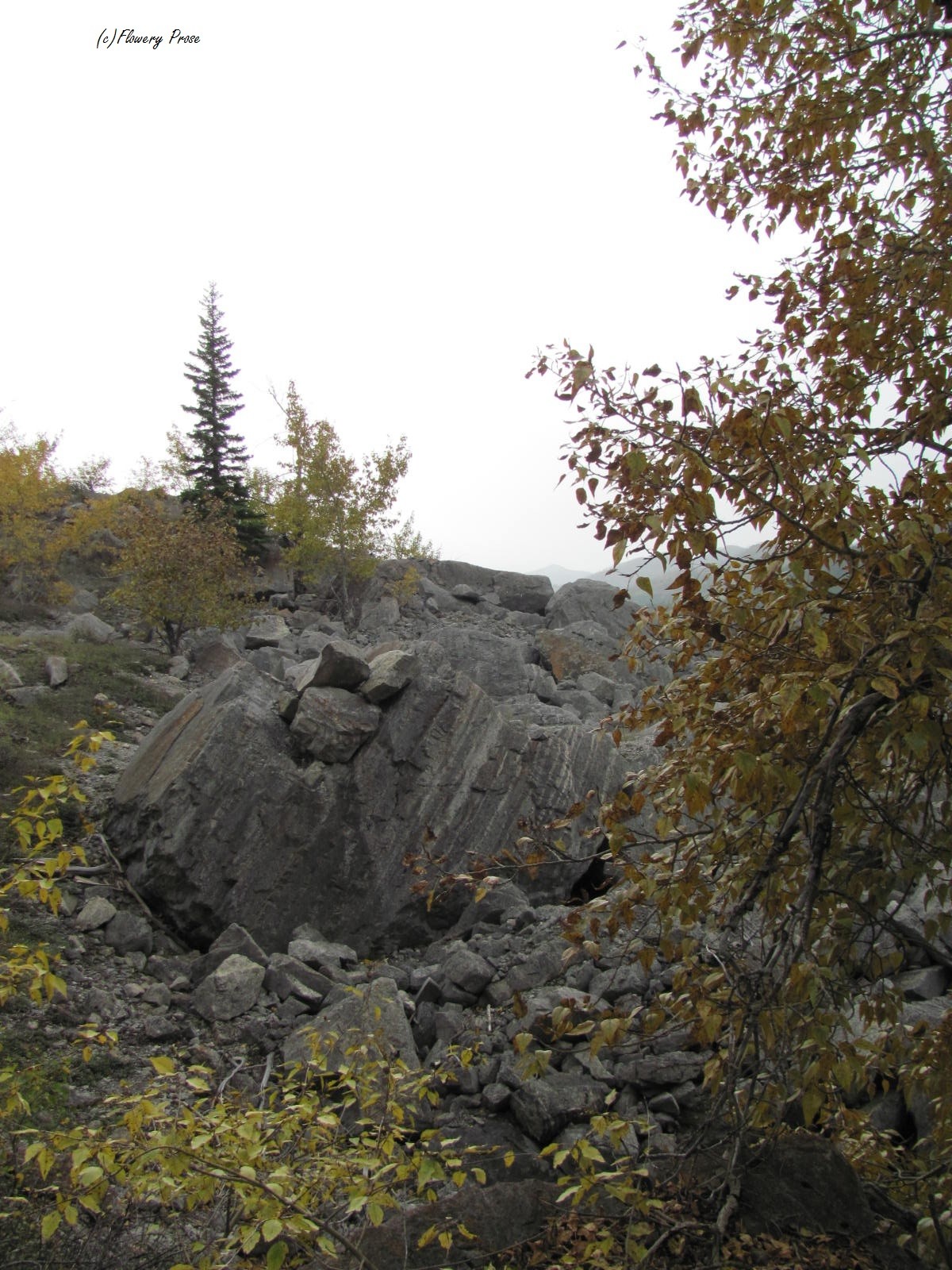

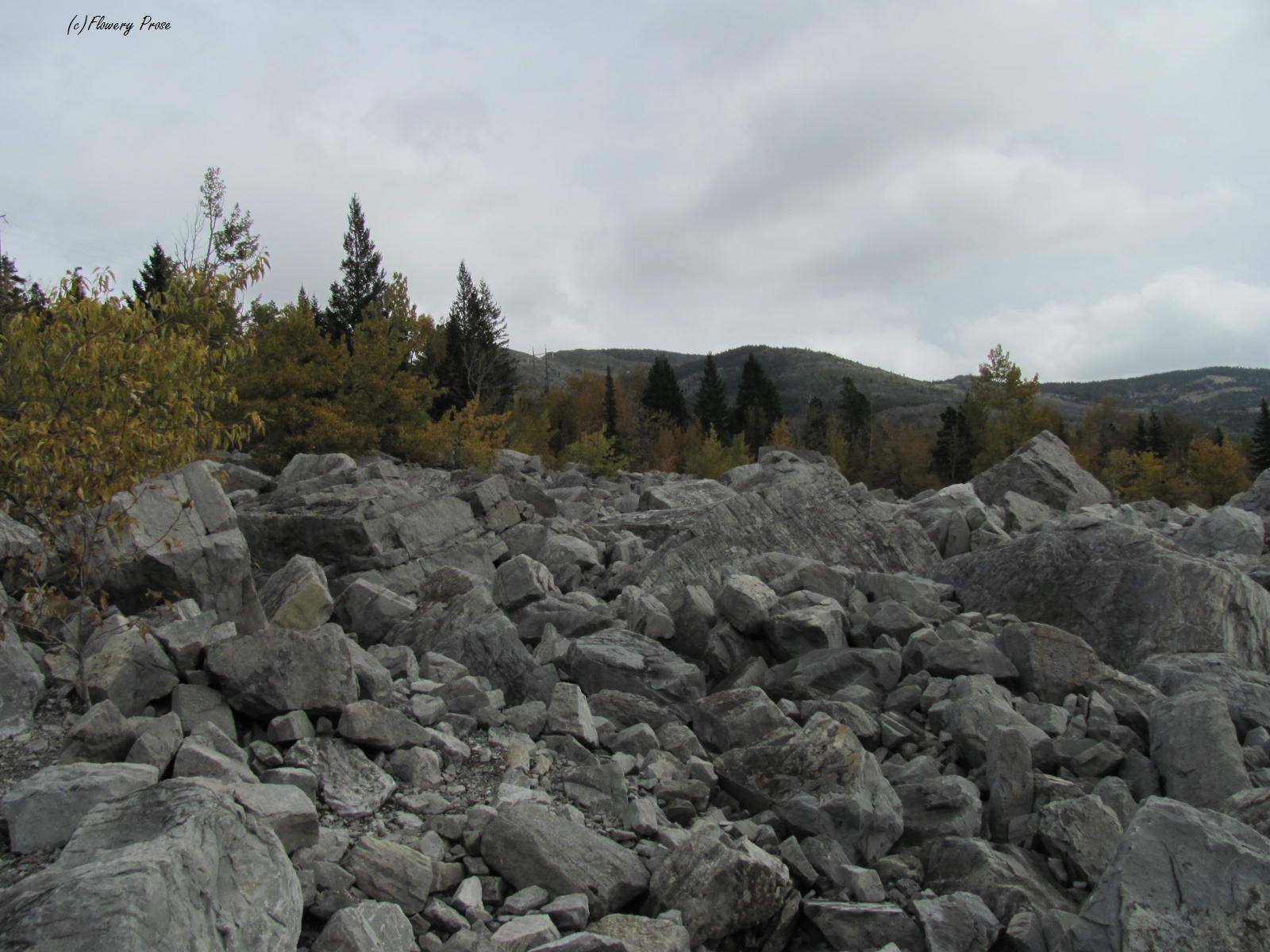

If you’re interested in reading more about the Frank Slide, please click here and here. There are some amazing stories of acts of heroism and survival, as well as a few persistent legends (the town’s bank and the $500,000.00 inside of it weren’t really buried under all that rock, as many have claimed).
Related articles
- Lime kilns. (therelight.wordpress.com) – taking advantage of all of that fallen limestone, lime kilns were built in 1912 by the Winnipeg Fuel and Supply Company.
Photo credit – Photo #1 was taken by R. Normandeau.
ADDENDUM:
After I published this post yesterday, my Grandpa sent me a photograph that he took a few years ago as he flew over the slide zone in his sailplane. It is an incredible perspective of the magnitude of the disaster. (Photo credit – W. Mueller)


 Flowery Prose.