
My hubby and I took a much-needed break last weekend and headed southwest, out to the mountains in the Crowsnest Pass. It was a chilly weekend, grey and drizzly, with high winds that gusted over 100 km/h on Sunday. Not really walking weather, but we went out anyway. It’s been a long time since we’ve been there and there’s so much to see.
There weren’t too many wildflowers blooming in the Pass this late in the season – mostly oxeye daisy and a veritable carpet of common tansy (Tanacetum vulgare). That gold colour really popped in the overcast weather!

Tansy is considered a noxious weed in Alberta, and it obviously LOVES the mountain climate. I know tansy was once a fixture of English gardens and it was brought over from Europe to North America for both its medicinal properties and ornamental value. For such a “common” plant, tansy has an impressive history – the lore associated with it is fascinating!
Some Really Weird and Interesting (and Occasionally Contradictory) Tansy Tidbits:
-
Tansy was commonly used by ancient Greek herbalists. In Greek mythology, the cup-bearer of the gods, Ganymede, was made immortal by ingesting tansy.
- In the 8th century AD, European monks used tansy to treat ailments such as intestinal worms, rheumatism, fevers, and measles.
- In the Middle Ages, tansy was taken to induce abortions…surprisingly, it was also used to prevent miscarriages and aid in conception. Accidental overdosing and death of the female patients was common. George R.R. Martin references tansy tea as a means to abort pregnancies in his fictional fantasy series A Song of Ice and Fire.
- In the 15th century, Christians began eating tansy with fish during Lent. They thought that eating fish caused intestinal worms, which would be cured by the plant.
- Tansy is often used as a companion plant, due to its ability to repel insects such as mosquitoes, ants, ticks, and Colorado potato beetle.
- A wonderful golden-hued dye can be made from tansy flowers.
- Tansy’s supposed worm-repellent properties caused it to be used in preparation of the dead for burial: even up until the 19th century, it was placed in coffins or wrapped into funeral winding sheets to preserve the dead. American colonists carried this idea a step further and used tansy leaves to repel flies and maggots and slow the spoilage of raw meat in storage.
- Tansy will cause contact dermatitis in some people (I’m probably one of them, though I didn’t touch any of the plants we saw).
- As you’ve probably guessed, tansy contains some serious toxins, including thujone (which can cause hallucinations, convulsions and even death). That’s why no one really uses it in puddings, cheese, salads, or omelets anymore. Today in the United States, you can consume tansy in alcoholic beverages, as long as the thujone is removed (how one goes about doing that, I do not know). Apparently, Jack Daniel, the famous 19th century American whiskey tycoon, didn’t take his drink of choice straight up – he sipped it with a bit of sugar and tansy leaves.
- A single tansy plant can produce up to 50,000 seeds. Just in case that isn’t enough guarantee of survival, it also reproduces via creeping rootstocks. No wonder it’s considered invasive.
Does tansy grow where you live?
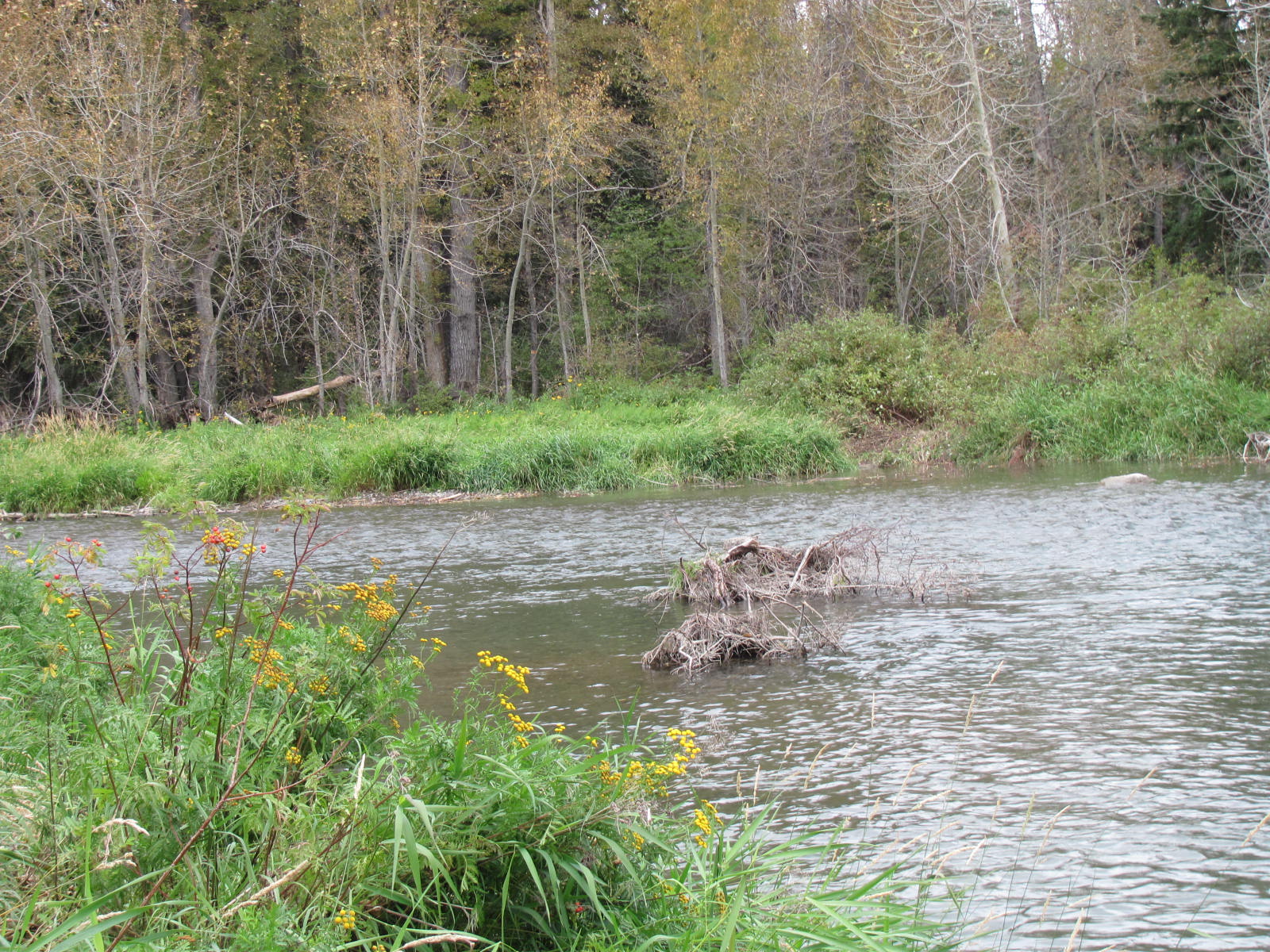
Tansy growing on the banks of the Crowsnest River. Flooding occurred on the river in June of this year and new channels were carved out everywhere.
(Sources: http://en.wikipedia.org/wiki/Tansy and Alberta Wayside Wildflowers, by Linda Kershaw, 2003 Lone Pine Publishing, Edmonton).


 Flowery Prose.