
Before an absolutely wicked thunderstorm chased us out of the Cross Conservation Area last Thursday afternoon, my hubby and I enjoyed a leisurely stroll through the aspen forest. The wildflowers have all pretty much finished blooming, and the warm, rich scent of decaying foliage was in the humid, still air. Brown and yellow leaves crunched underfoot and any Saskatoon or currant berries left on the shrubs were shriveled and inedible. (I did manage to find some still-plump chokecherries, though). I guess it all means autumn is really and truly here. I adore this season, but it seems as if I merely blinked, and summer had completed its cycle. It saddens me….
Another sure sign of fall in Alberta is the ripening of the berries of the wildflower fairybells:
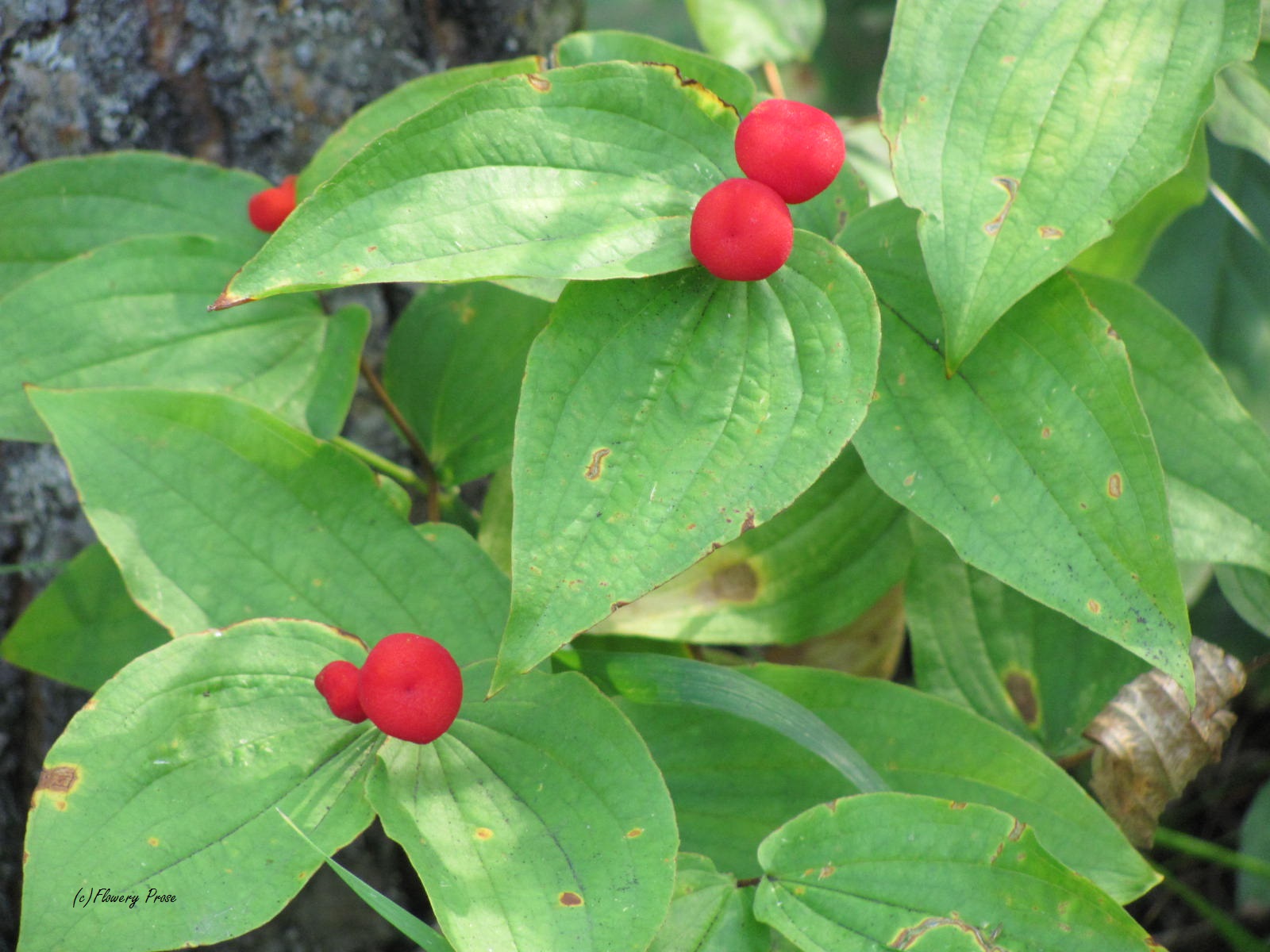
A member of the lily family, rough-fruited fairybells (also called rough-fruited mandarin – Prosartes trachycarpa, formerly Disporum trachycarpum) are a common sight in the damp understorey of the forest. While their green-white flowers are not quite showy enough to make much of a statement at the height of the summer, you cannot miss the nearly neon red berries that appear at this time of year. Until I started doing some reading, I didn’t realize the berries were edible, although I’m sure their velvety coating and large, often-numerous seeds (there may be up to 17 in a fruit) must give them a bit of a strange consistency on the tongue. I haven’t tried one myself, but historically, they were eaten out of hand by the Blackfoot people of the First Nations. The berries apparently taste like apricots, which REALLY makes me wonder why the Blackfoot called them “dog feet” plants. I think I much prefer the name “fairybells” – there’s a suggestion of magic and whimsy there that “dog feet” just doesn’t convey…. 😉
How are you marking the change of season in your part of the world?
Related articles
- Chokecherries (forestsogreen.wordpress.com)
- Chokecherries and Ponderosa Pine Cones! (okanoganhuntergatherer.wordpress.com)
For more information about fairybells, consult Wildflowers of Calgary and Southern Alberta, by France Royer and Richard Dickinson.


 Flowery Prose.